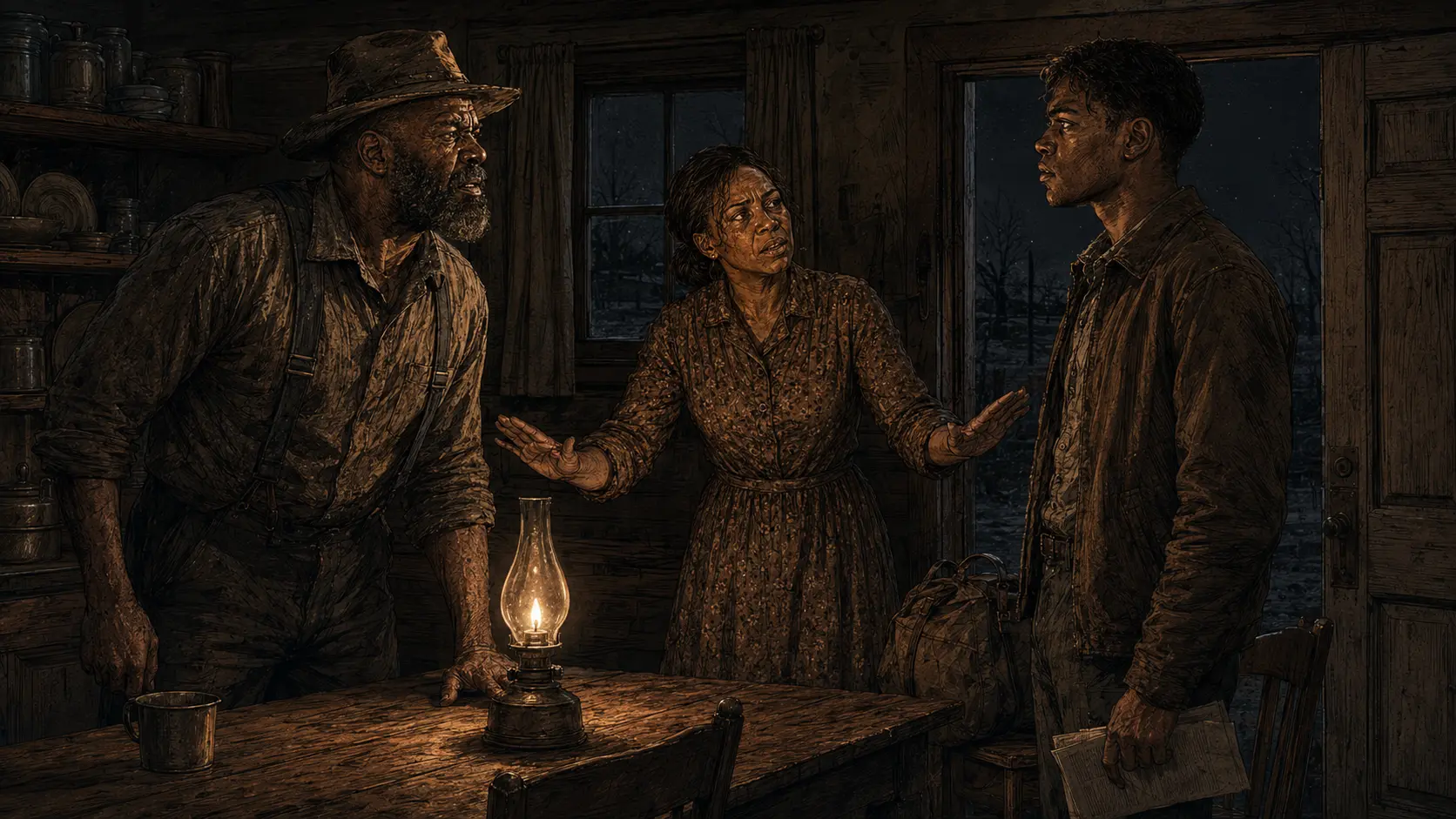
Granby, Colorado · 1944
Pledge Allegiance
He wants to choose the country that has never chosen him.
01
John’s decision to enlist is hope sharpened into confrontation.
John is old enough to see the contradiction clearly: the country asks for his allegiance while withholding its own. James and Dottie hear danger in his decision. John hears the right to decide what kind of man he will become.
The scene stays intimate even as the music widens. A son argues with his parents; an entire national promise enters the room with them.
02
On stageKeep the family at the center of the indictment.
The number needs no courtroom and no flag-waving tableau. Its power comes from three people who love one another and cannot agree on what survival requires.
Let the arrangement grow around John without allowing the spectacle to rescue him from the cost of his choice.
03
Why this number mattersHe is not asking whether America is worthy of him. He is deciding whether he will surrender the claim.
The song turns patriotism from a slogan into a wager. John’s hope is dangerous precisely because it is informed, not naïve.
The pledge is not obedience. It is a demand that the country hear its own words.